
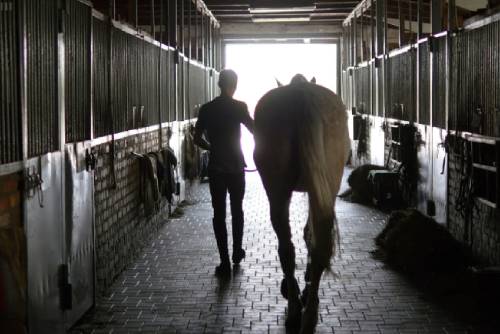
A desert sunrise in Gilbert may start at a comfortable 72 °F and soar past 105 °F before lunch; an inattentive barn needs only those few hours to let an auto water system run dry, allow bedding to ferment into an ammonia haze, or overlook the first signs of heat fatigue. Choosing horse boarding in Arizona is therefore a health decision first and a convenience decision second. John Volken Ranch shows what top-tier care looks like.
Top 1: Proper Stall Size and Daily Clean-Out
Before you admire the arena, measure the stall. Extension specialists note that 12 × 12 feet is the modern baseline for a 1,000-pound riding horse, with 12 × 14 or even 14 × 14 feet preferred for warmbloods or broodmares, so the animal can lie flat, roll, and pivot without hip contact. Height matters, too—7- to 8-foot walls with solid lower partitions curb drafts and dust drift. Equally vital is daily waste removal.
Welfare guidelines warn that ammonia levels exceeding 10 ppm inflame airways and attract flies, yet soiled bedding can reach that threshold in under 48 hours if mucking lags. Expect stalls cleaned at least six days a week, mats lifted for disinfecting, and runs or paddocks that prevent horses from standing in damp shavings. If the barn in a horse boarding in Arizona can’t show you a written cleaning schedule, keep shopping.
Top 2: Consistent, Customized Feeding Programs
Desert air saps moisture fast, and long gaps between meals magnify ulcer risk. The American Association of Equine Practitioners recommends round-the-clock access to forage or, at minimum, several small hay feedings to neutralize stomach acid. Clarify whether alfalfa (high calcium, ulcer-buffering) or Bermuda (steady fiber) is standard, and insist on weighed portions—not vague “flakes”—for consistency.
Confirm that automatic waterers are checked twice daily and that staff will add electrolytes during heat waves. A premium horse boarding in AZ also posts feed charts where owners can audit them and dispenses owner-supplied supplements at no extra cost, ensuring diets stay on point when competition schedules or metabolic issues demand precision.
Top 3: Diverse, Well-Maintained Arenas
A lone, hard-packed ring forces repetitive strides that strain tendons. Biomechanics research from UC Davis shows surface upkeep—not just material—has the greatest impact on lowering soft-tissue injuries. Look for barns with multiple arenas groomed on a published schedule, drag depths posted, and watering systems that keep dust below respiratory-safe thresholds.
Ideal layouts include a large multi-purpose arena, a dedicated jumper ring, and a spacious roping pen, plus round pens for controlled schooling. Good lighting extends ride times past sundown—indispensable for owners who reach the barn after work. If a horse boarding can’t explain its footing protocol or show drag logs, be prepared for higher farrier and vet bills down the road.
Top 4: Heat-Stress and Emergency Preparedness
Summer highs above 110 °F make shade and electrolytes non-negotiable. The Arizona Division of Occupational Safety and Health operates a Heat-Stress State Emphasis Program urging agricultural employers to adopt written cooldown procedures, ready electrolyte access, and shaded rest areas. Ask any stable to display its plan: turnout shifted to dawn or dusk, misters or fans in barns, and staff trained in equine first aid.
Verify veterinarian on-call lists and insist on an incident log documenting every colic, laceration, or choke—paper trails deter shortcuts. Reputable barns even stage annual emergency drills, ensuring gate codes, haul-routes, and water sources are second nature when minutes count.
Top 5: Transparent Pricing and Added Value
Board rates in the Valley range anywhere from $250 for self-care corrals to $500600-plus for full-service stalls with twice-daily hay. Sticker price, however, rarely tells the whole story. Demand a line-item sheet that spells out hay type and weight, cleaning frequency, turnout schedule, arena access, blanket changes, trailer parking, and vet or farrier handling fees.
Community-minded programs often funnel revenue back into footing upgrades or lesson scholarships, giving owners tangible improvements instead of sudden surcharges. If a manager hesitates to disclose charges in writing, assume surprises later. A forthright estimate lets you compare apples to apples and keeps your budget intact for shows, supplements, and saddle fittings.
Saddle Up with John Volken Ranch—Your Horse Boarding in Arizona Solution
When generous stall space, science-backed feeding schedules, groomed arenas, robust heat plans, and transparent pricing converge under one roof, you and your horse enjoy fewer vet calls and more productive rides. John Volken Ranch invites you to visit the barns, meet the caretakers, and compare value for yourself. Winter show season fills stalls fast, so contact us today at 480-490-7207 or email azranch@volken.org to secure a premium spot before temperatures climb again.